

How Much Cake Do You Actually Need? A Simple Guide to Getting the Size and Cost Right
Ordering a cake sounds simple until you actually sit down to do it. How many kg for 25 people. Is that too much or barely enough. Do kids count the same as adults. Should you round up just in case. Most people end up either over ordering and staring at half a cake in the fridge two days later, or under ordering and watching the last three guests get a sliver each while pretending they didn't want more anyway.
There's actually a simple formula behind this, and once you know it, you stop guessing.
The Basic Math
Guests multiplied by portion size in grams, divided by 1000, rounded up to the nearest half kg. That's it. If you've got 20 guests and want standard 100g slices, that's 2000 grams, or 2 kg. Simple enough on paper, the part people usually get wrong is the portion size itself, since that changes depending on who's coming and what kind of event it is.
Picking the Right Portion Size
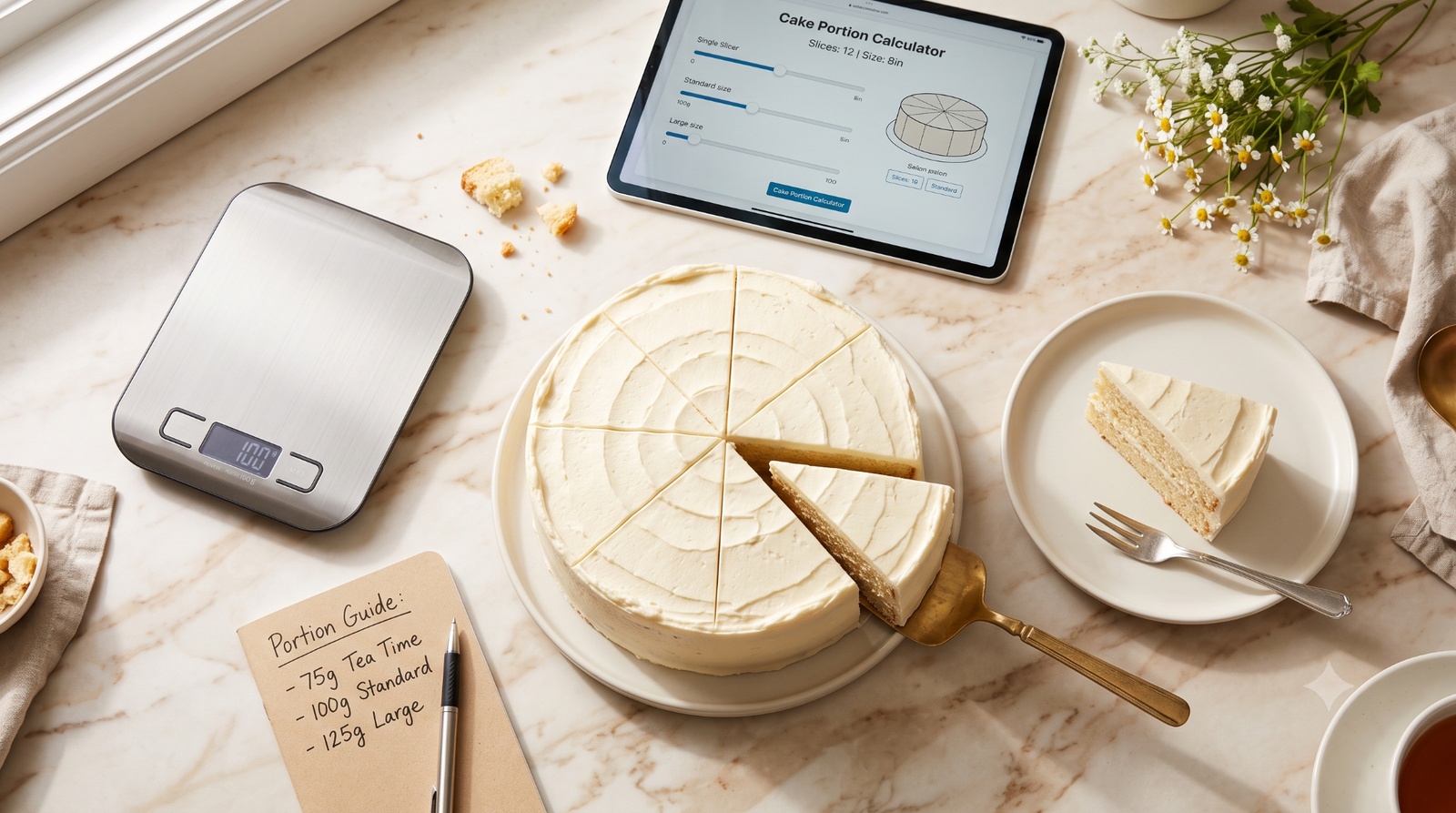
NikkiFlower's cake size calculator works with three portion sizes, and each one fits a different kind of occasion.
Small, 75g a slice. This is the tea time portion. Works well for office celebrations, small gatherings where cake is one of several snacks on the table, or corporate events where people are grabbing a bite between meetings rather than sitting down for dessert. You can serve more people off the same kg here, which is handy when the guest list is long but nobody's expecting a full dessert course.
Standard, 100g a slice. This is the default for most birthdays and get togethers. It's a proper slice, enough to actually taste the cake without leaving people wanting a second helping every time. If you're not sure which size to pick, this is usually the safe middle choice.
Large, 125g a slice. This is for anniversaries, intimate family dinners, or any occasion where the cake itself is the main event rather than a side thing. Fewer guests, bigger slices, a bit more indulgent. Makes sense for a small wedding anniversary dinner or a milestone birthday with close family.
Quick Reference by Occasion
- Office or corporate event: Small portions, since cake is usually one of many things on the table
- Birthday party, kids or adults: Standard portions work for most guest lists
- Anniversary or intimate family dinner: Large portions, since the group is smaller and the cake matters more
- Big wedding or large gathering, 50+ guests: Standard portions, but consider a square cake instead of round, since square cakes give about 30% more servings from the same size
Roughly What It Costs
Pricing depends on flavour and design, but as a rough guide, half a kg usually falls somewhere between 500 and 700 rupees, and a full kg between 1000 and 1300 rupees. Designer or photo cakes run higher, plain sponge and butter cakes sit at the lower end. If you're budgeting for a bigger event, it helps to work out the kg first using the calculator, then multiply against this range to get a ballpark figure before you actually order.
When You Need a Tiered Cake
Once the guest count gets large enough, a single tier stops making sense, both visually and practically. A cake much beyond a certain size starts looking flat and a bit odd on a table, so it gets split into tiers instead. As a rough guide, once you're looking at 2 kg or more it's worth considering a second tier, past 4 kg a third tier usually looks better, and past 6 kg a fourth tier keeps things proportional. The calculator will flag this automatically and suggest a tier stack based on your guest count, so you don't have to work that part out yourself.
How to Actually Cut It
This is the part almost nobody thinks about until the cake's already in front of them and someone's hacking off a random wedge. A few basics that make a real difference.
For round cakes, the classic method is cutting straight down the middle first, then continuing to halve each section into wedges rather than cutting random slices from the edge inward. This keeps portions even and means you're not left with one giant leftover chunk at the end.
For square or rectangular cakes, a grid cut works better than wedges. Cut straight lines across in one direction, then straight lines across the other direction, so you end up with even squares instead of triangles. This is also part of why square cakes serve more people for the same overall size, the grid method wastes very little cake compared to wedge cutting on a round one.
If you're cutting a tiered cake, work from the top tier down, and remove each tier to a separate board before slicing rather than trying to cut through multiple tiers at once. It sounds obvious once you say it, but it's the single biggest thing people get wrong at bigger events.
Try the Calculator Before You Order
Rather than doing this math by hand every time, the cake size and weight calculator does all of it for you. Put in your guest count, pick a portion size, tell it the occasion, and it works out the exact kg, whether you need a tiered cake, and gives you a cutting guide preview you can actually follow on the day. It also flags if you're about to order more cake than you need, so you're not left explaining a leftover half cake to yourself on Monday morning.
Once you've got a size in mind, you can head straight to the full cake catalog and order online, with same day delivery available across 360+ cities. And if you're still unsure even after using the calculator, NikkiFlower's support team is a quick WhatsApp message away and happy to help you land on the right size.









Comments